A NEWDISASTER
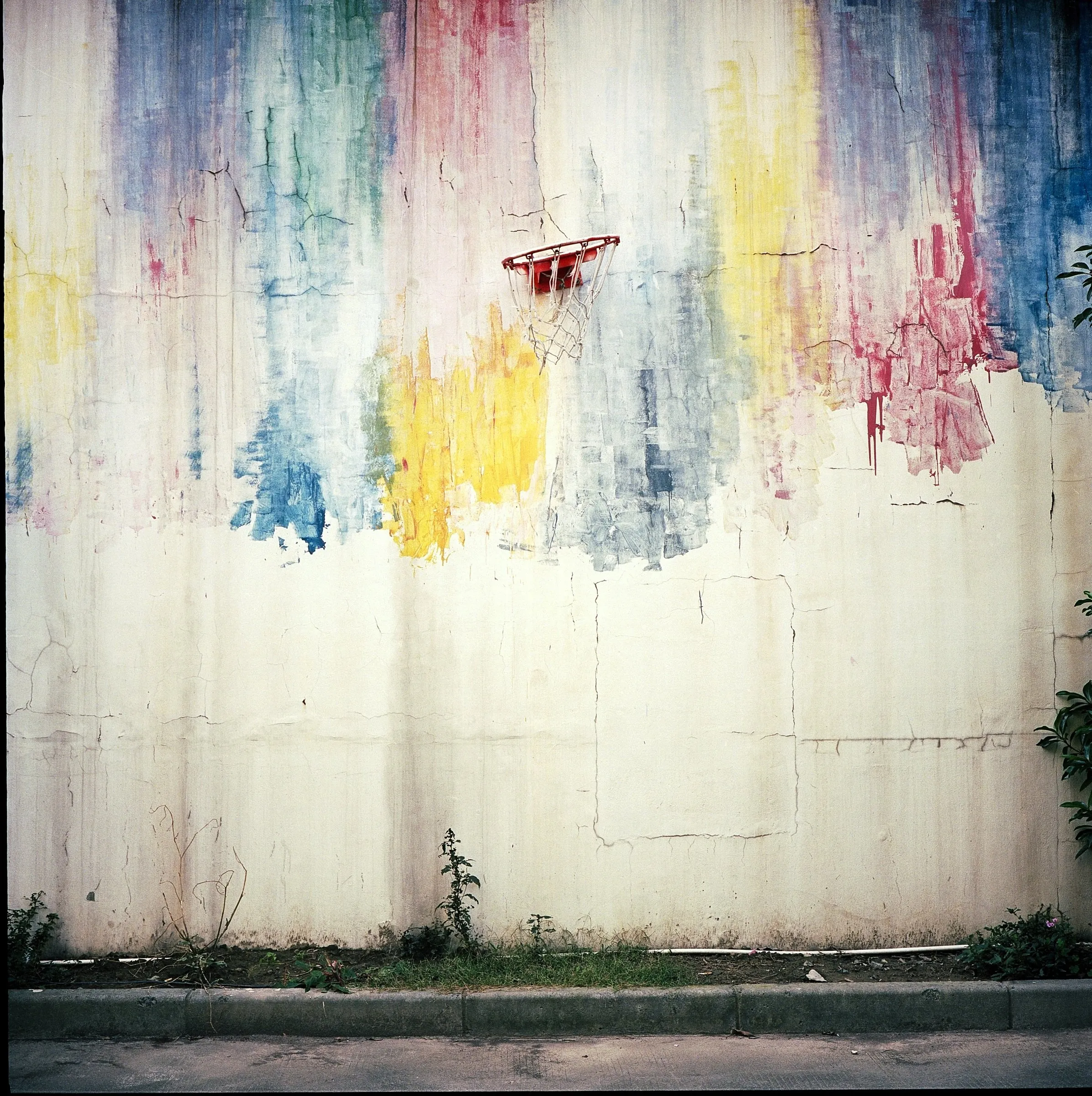 China, 2015
Choices
T he advent of powerful AI image generation models coincided with me taking fewer pictures. That isn’t very surprising: I could generate all sorts of images I don’t have the access or the skill to create. But I didn’t really do that, either.
Ted Chiang wrote an essay a couple of years ago, “Why A.I. Isn’t Going to Make Art”, that argued the problem with using LLMs to make art is that they collapse too many decisions into the prompt. They trend towards a default set of choices:
Your first draft isn’t an unoriginal idea expressed clearly; it’s an original idea expressed poorly.
I can feed a model a picture of my mother-in-law’s dearly departed dog, and generate an image that I don’t think she could distinguish from one I took on my Mamiya 6 and printed in the darkroom. It wouldn’t require the dog, and it wouldn’t require the camera.
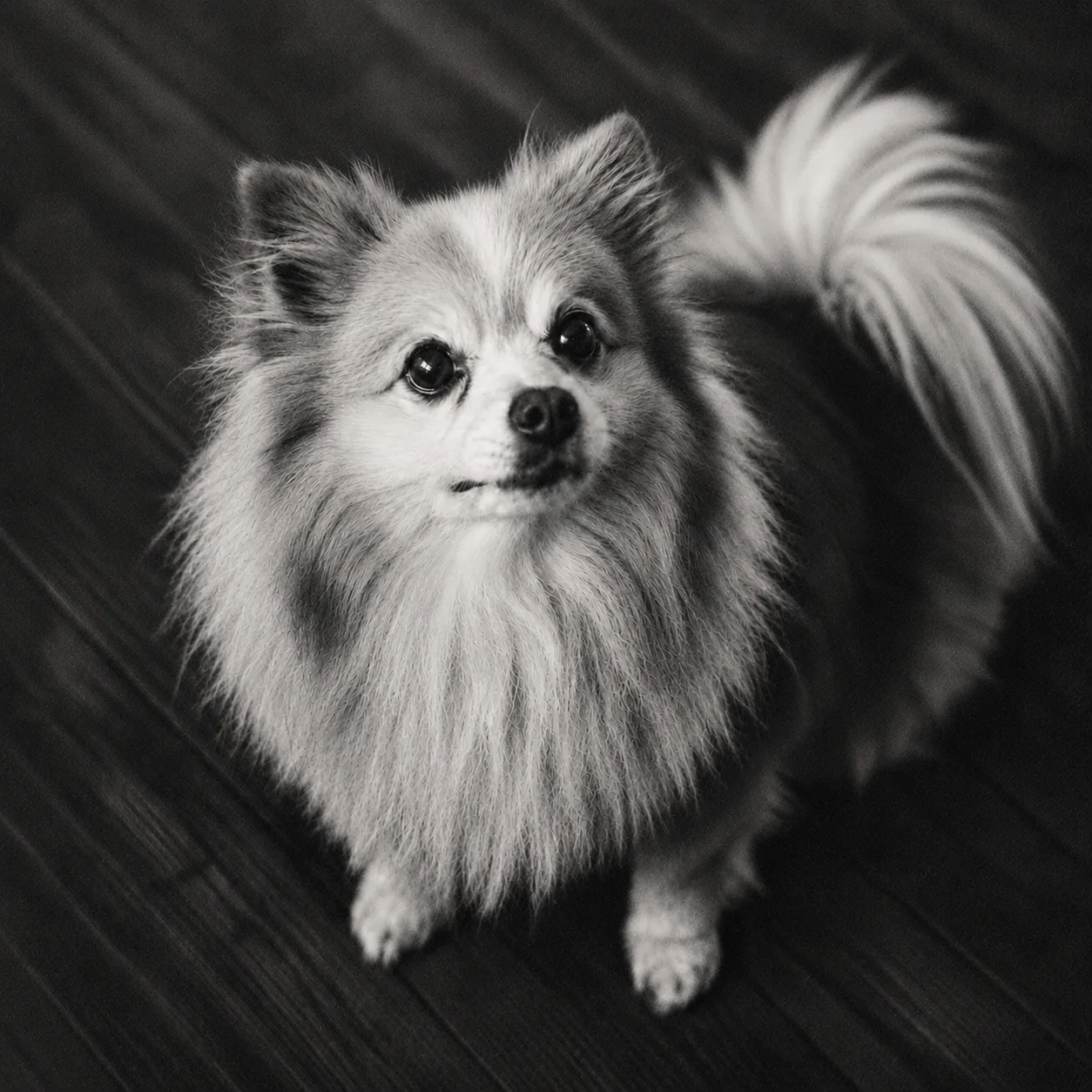
There is something to that. A camera is a thing strapped around your neck. It’s a lens between you and what you are looking at. People can be uncomfortable when you point it at them. I can be uncomfortable pointing it at them. Making an image with AI removes the interposition: there is nothing between the world and my interpretation of it. It also removes the world: all that’s left is my conception of the image I want.
It’s easy to say that you can’t make art with AI, but given I take photographs, that feels a little shaky. It took time before photography itself was accepted as an expressive medium, not just a mechanical recording of reality. Stieglitz’ Equivalents marked a turning point. Stieglitz didn’t try and mimic painterly techniques; he took photos of something universally available, clouds, and used them to demonstrate the expressivity of photography. Photography reproduced what was in front of the camera, but it also involved meaningful, artistic choices: what to point the camera at, how to frame, focus, develop, print.
One lineage of photographers, notably Ansel Adams and the f/64 group, focused on straight photography: representational, sharp, and natural. Another developed constructed photographs; from pioneers like Rejlander up to Jeff Wall and Gregory Crewdson they elaborately staged their pictures.
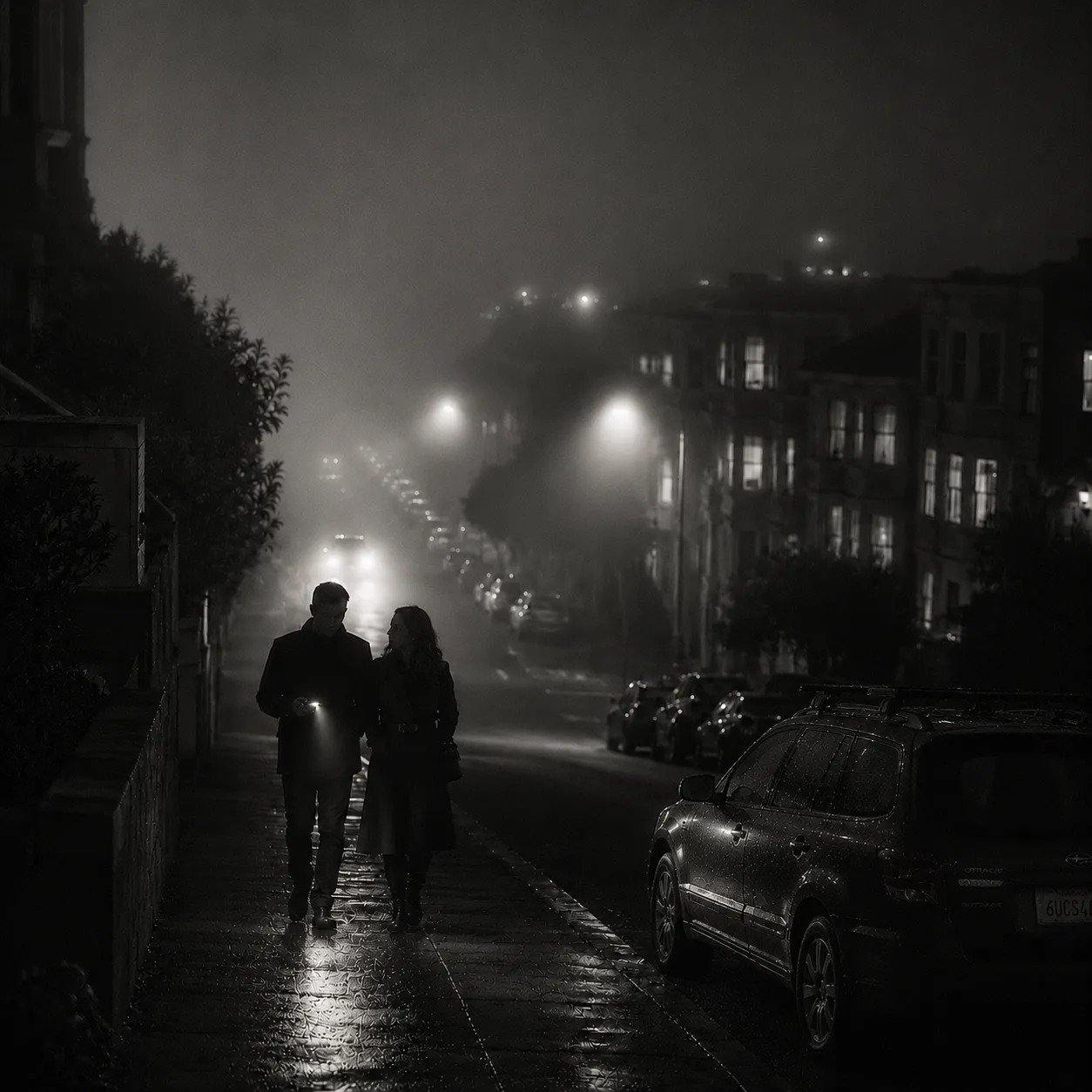
Constructed vs natural was a spectrum, not a hard boundary. One of my favorite black and white pictures, Fred Lyon’s Foggy Night, Lands End was staged: it was needed for a magazine piece and features his wife and his landlord, who were all having dinner the night the fog rolled in. Some part of me felt a little worse knowing that: I liked the romantic idea of someone finding such a perfect picture. But it’s a great image, and the staging is a choice, an intentional, artistic choice.
There is a type of photograph I think of as postcard pictures, because you can often literally get them on a postcard. This is not to say they are bad: they’re usually the exact opposite! Capture the fire falls in Yosemite, the fog rolling in over the Golden Gate Bridge, or even a gas station on your Leica and you can have a wonderful image. If you put in the effort to find the right time and the right framing, even more so.
The problem is that there is a “right framing”. It’s very difficult not to reproduce the choices made by others; to recreate the platonic ideal of the picture that you find on the postcard. And if you do want that, current image generation models can give you a more statistically pure version.
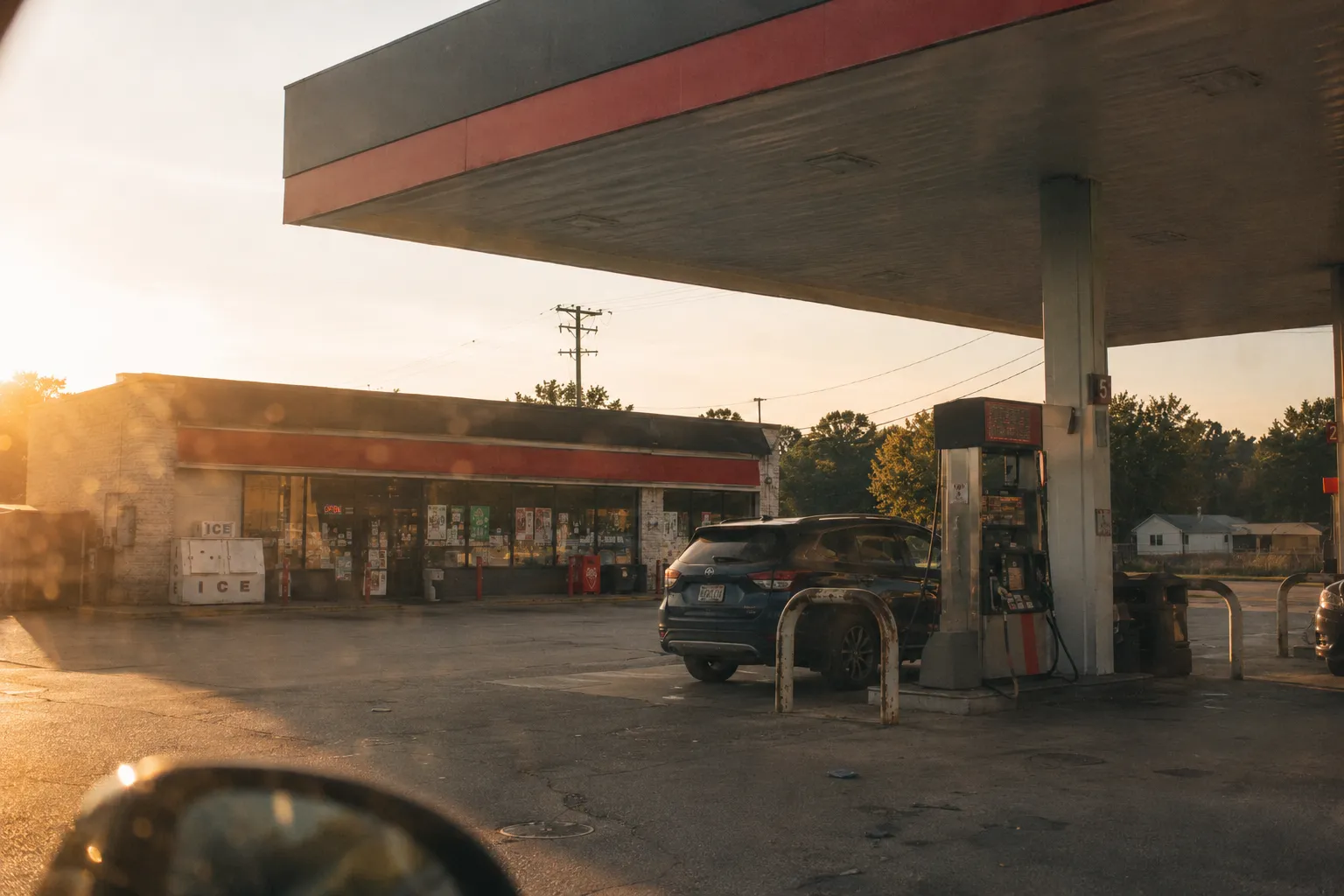
Photography vastly lowered the barrier to executing a clear and competent image. But it didn’t do much to lower the barrier of deciding what to make images of. AI makes the execution barrier even lower, again without changing the difficulty of deciding.
That leaves a bit of a paradox. If I don’t understand what I want, should I take the picture? If I really, really know what I want, do I need to?
One of Ansel Adams’ most famous photographs is Moonrise, Hernandez. It was a scene he noticed while driving; he pulled over and captured it without a light meter, using the moon’s luminance to calculate the exposure. His taste, his appreciation, saw something in that landscape. But it outstripped even his formidable capability for execution. It took years before he made the prints we associate with it, years of iteration and experimentation to find the expression he wanted in the darkroom.
Taste, for almost everyone, runs ahead of your ability to express it. It’s the subject of an Ira Glass talk on “the gap”: the sensation where you can judge whether something is good but you cannot yet produce a good thing yourself.
A struggle with execution forces choice, and it forces reflection. The struggle itself isn’t good or bad: we no longer expect painters to grind their own inks to get access to certain colors. But understanding why you don’t like some aspect of your work, or why you would go to the effort to find a certain pigment, refines your taste, your ability to appreciate. Your taste and your expressivity feed on each other.
What we have now is a situation where, in a number of cognitive and creative fields, expressivity can outpace taste. You can generate better things than you have the ability to appreciate, so you are forced to default to the choices of others. Art is about making choices. AI might let you make images, but it doesn’t help you make art.
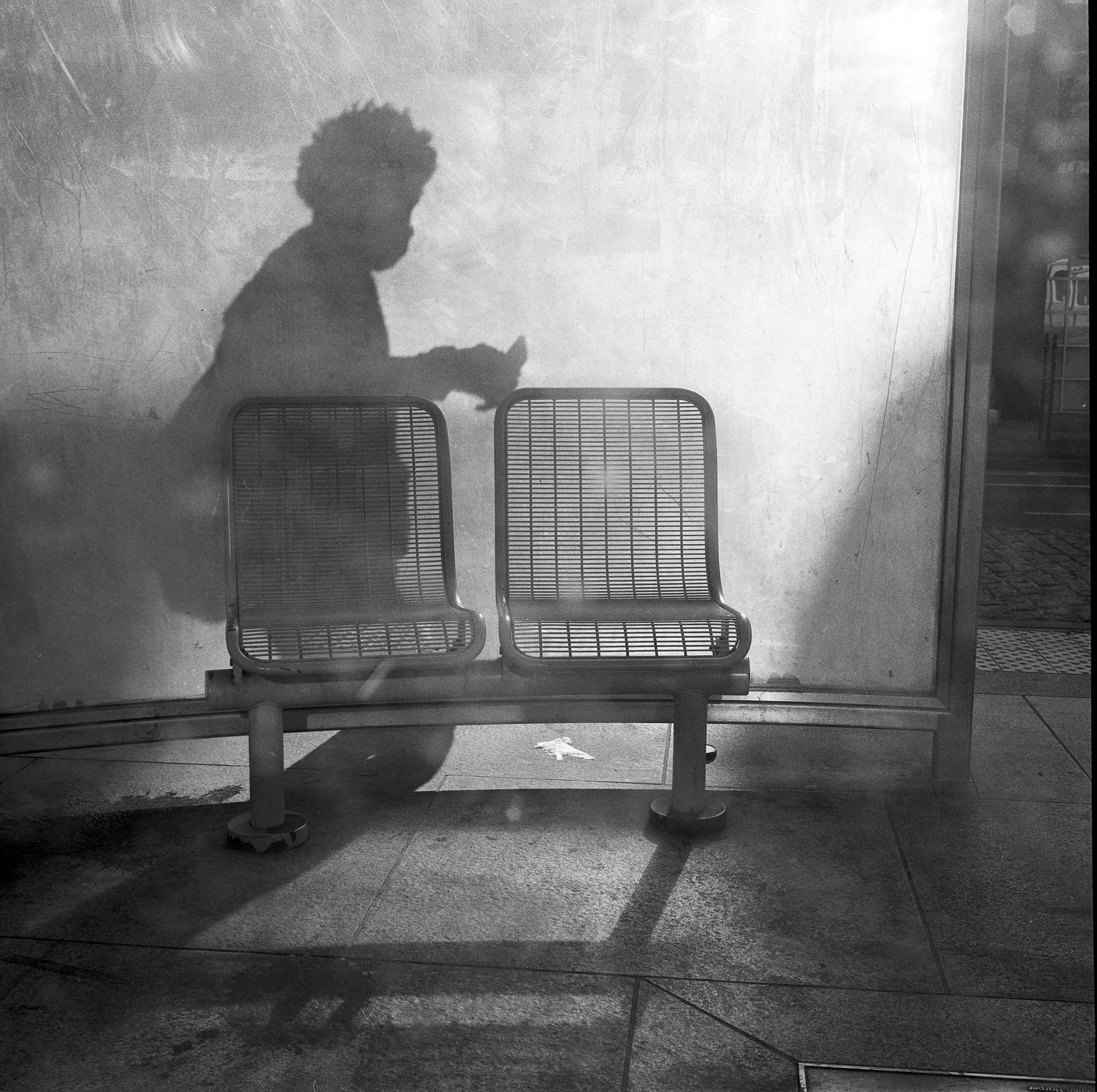 Muni, San Francisco
 Blued
A beat from 2008, made in Reason (my grown-up FruityLoops), for a friend whose vibe it didn’t quite fit, so it never went anywhere. The file took its name from the piano riff I was chasing, which had a bluesy feel. I was listening to a lot of RJD2 at the time.
The version below has been through Suno’s remaster setting, which gave the mix width and body it didn’t have. I was never very good at mastering.
Blued — 2008 / 2026 remaster
 San Francisco, 2020