The Revenger
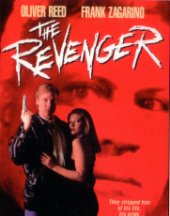

"There are far worse girlfriend kidnapped by a porn kingpin movies out there."
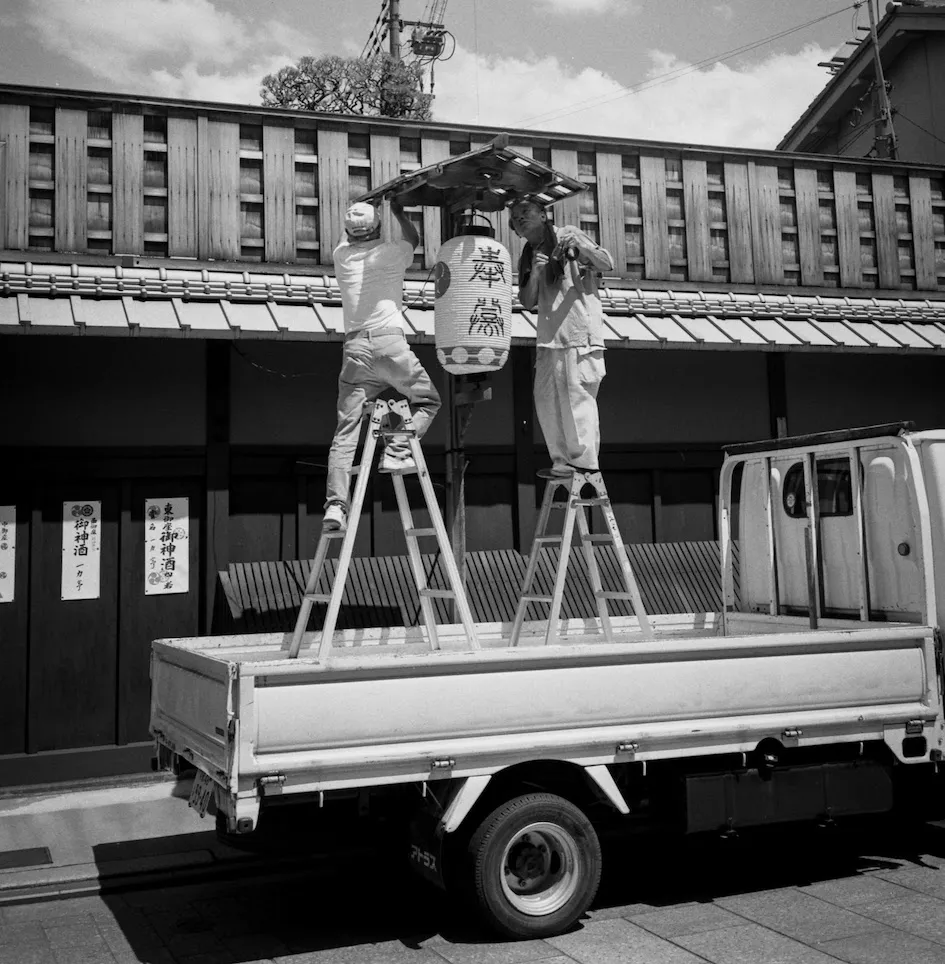 Japan, 2016
 B ack in 2012 I reviewed the Wild Flag show at the Electric Ballroom in London for the music section on Virgin.com, where I worked at the time. My colleagues were excellent music writers, and I was a software engineer, but I loved the record and the band. The show was fantastic, one of the most (appropriately) electrifying rock shows that I’ve been to, kinetic and exciting and slightly over the top. I remember drafting in my head when awaiting the encore, thinking of referencing Television for the angular post-punk vibes, only for the band to pre-empt me by playing something off Marquee Moon when they came back.
I was a fan of Carrie Brownstein, the leader of what was somewhat of an indie-supergroup, thanks to her time in Sleater-Kinney. She is probably now best known for creating Portlandia with Fred Armisen. I appreciated her creativity on guitar and her talent as a song writer but it was her column Monitor Mix that had made me pay attention beyond the music. Parts of it stayed with me years after she stopped writing the column, and before Hunger Makes Me A Modern Girl, or Portlandia.
I discovered Sleater-Kinney in the early 2000s, the way you discovered bands back then: piracy. I saw them several times, including the date before they announced the hiatus of the band. About a year later, Brownstein started writing the on NPR.
The column felt like a dispatch from a whole different place. It was clear she wasn’t just a guitarist moonlighting as a writer. She was a writer. Her prose had the same sharp angles and pivots as her playing, catchy, unpredictable. It was a strange experience as at some level she wrote mostly about fandom, while being someone who I was a fan of myself.
“Over the years, music put a weapon in my hand and words in my mouth it backed me up and shielded me, it shook me and scared me and showed me the way; music opened me up to living and being and feeling. Writing for Monitor Mix was part of that musical continuum, particularly the ways in which I was able to connect with other music fans. If nothing else — if someone was trying to figure me out, who am I, what exactly I do — well, that’s it. I’m a fan.”
One series had her attempting to understand Phish, a journey I never successfully made. She dove into the Phish fandom, working along the contours of it with anthropological curiosity. She also wrote about things like the weird sensation of liking a follow-up band more than the original, irking the purists.
It was a relatable and human column, and it helped me realize that the people who I really admired had a common feature. They were not bound by their their Wikipedia profile. You could be a fan and have fans, and a guitarist, and a writer.
Ryan Broderick of Garbage Day often argues that post-internet with the fading influence of TV and newspapers, mainstream culture has fragmented into fandoms. Being a “Trekkie” used to mark you as outsider; now everyone’s a Trekkie for something. People attend tragic Bridgerton balls, run subreddits for obscure sports, and treat politics like a team sport. What you are a fan of becomes a key part of your identity, sometimes an overriding one. Monitor Mix showed how a deeply creative person embraced fandom: unapologetically but considerately, as a facet of a personality much richer and more complex than a one-line identifier.
It took me a long time to understand that lesson. The idea of not putting yourself in boxes, not determining what you can do by how it will seem given your reputation. I felt very self-conscious about writing that review back in 2012, and in the 15 odd years since the column finished I have continued to compartmentalize. I guess this site is another attempt not to.
It’s easy to think of someone like Brownstein striding effortlessly between domains Renaissance-style, but I doubt that was how it was. Her interests were her interests and she followed them. Doing that while being creative, expressive and not just consuming or collecting is the example I really appreciate.
"There are far worse girlfriend kidnapped by a porn kingpin movies out there."

T his is a song I first recorded in 2002, inspired by a phone call (datedly, I believe, on a landline) between a friend and his then-girlfriend. I had the riff from randomly detuning and trying shapes on the neck until something clicked, and the lyrics came together quickly from our conversations after. The production is bedroom: muddy guitar sounds, timing and tuning drifting about, and the performance isn’t the strongest even by my own low bar. But, there was a song there, and I liked it enough to think about 20 years later.
Bedroom recording
AI reimagining
A couple of years ago Suno emerged as one of the first strong music generation models. The team behind it evidently understand music: the tools have evolved at a strong clip and are engaging to use. After having it generate straight up slop for my own personal entertainment for a while, I hit on the idea of having it cover some of my own tracks.
The second version of the song here is the result of that, Suno’s (specifically the v5 model) interpretation. It leans into the kind of early 2000s rock that I listened to a decent amount at the time. The production is slick, with clear separation between the parts, solid dynamics, and the vocal performance is in-tune and expressive. It sounds like a finished track from a real, mid-range band from the time, to my ears.
It also makes me think about Walter Benjamin’s 1930s essays on art and mechanical reproduction. Benjamin worried that mass reproduction (photography in his case) stripped artworks of their “aura”, which for him was that sense of place, context, and connection to their moment of creation. In many ways, he was the first to be asking chat how many aura points the Nazi’s lost with propaganda, no cap.
With AI it’s less reproduction but more re-creation, synthesizing new versions of things that are also somewhat the norm of a huge group.
What is the aura of this cover? It sounds like a band that never existed, but also somewhat like countless bands that did. The performance is competent, the vocals far stronger than mine, and the performance is well-executed. I’d like to say it’s aura-less, but I suspect if I heard it playing I wouldn’t think twice of nodding along.
As a (lapsed, and never very good) songwriter, having a tool that can transform a rough demo into something polished is remarkable. But I doubt that if I’d created this song through prompting twenty years ago it would have stayed with me.
Tools like Suno will likely integrate into artists’ workflows, as Pro-Tools, plugins, and every other aspect of modern production has. Musicians will find creative applications, discovering new sounds, as they always have.
Where do I draw the line on creative validity though? Is it legitimate to prompt your way to a finished song? To write and record something, then have AI reinterpret it? To use an AI performance as a a demo or stand in before recording it with humans separately?
This last idea echoes something from Every Frame a Painting’s excellent piece on temp music in film scoring. Directors and editors cut scenes to temporary tracks for emotional context, then ask composers to replicate that same feeling, making the final scores seem… derivative. While the piece is original, it was created within a universe of choices made by other work. Suno’s studio allows for a fair bit of control, but many choices are still invisible and choices you didn’t consciously consider shape the final output. It’s a musical uncanny valley, except that the end result is pretty canny.
Where do I draw the line on the validity? To return to Monitor Mix, Brownstein quoted a note from Jean Smith about how “indie” evolved: “Indie is now a genre, where previously it was a stance”.
I think what will happen is that AI-free music will be a stance itself, maybe after that even a genre. I appreciate the tools, and I am impressed with them, but I’m not sure they help me write a better song. The aura is… fuzzy.
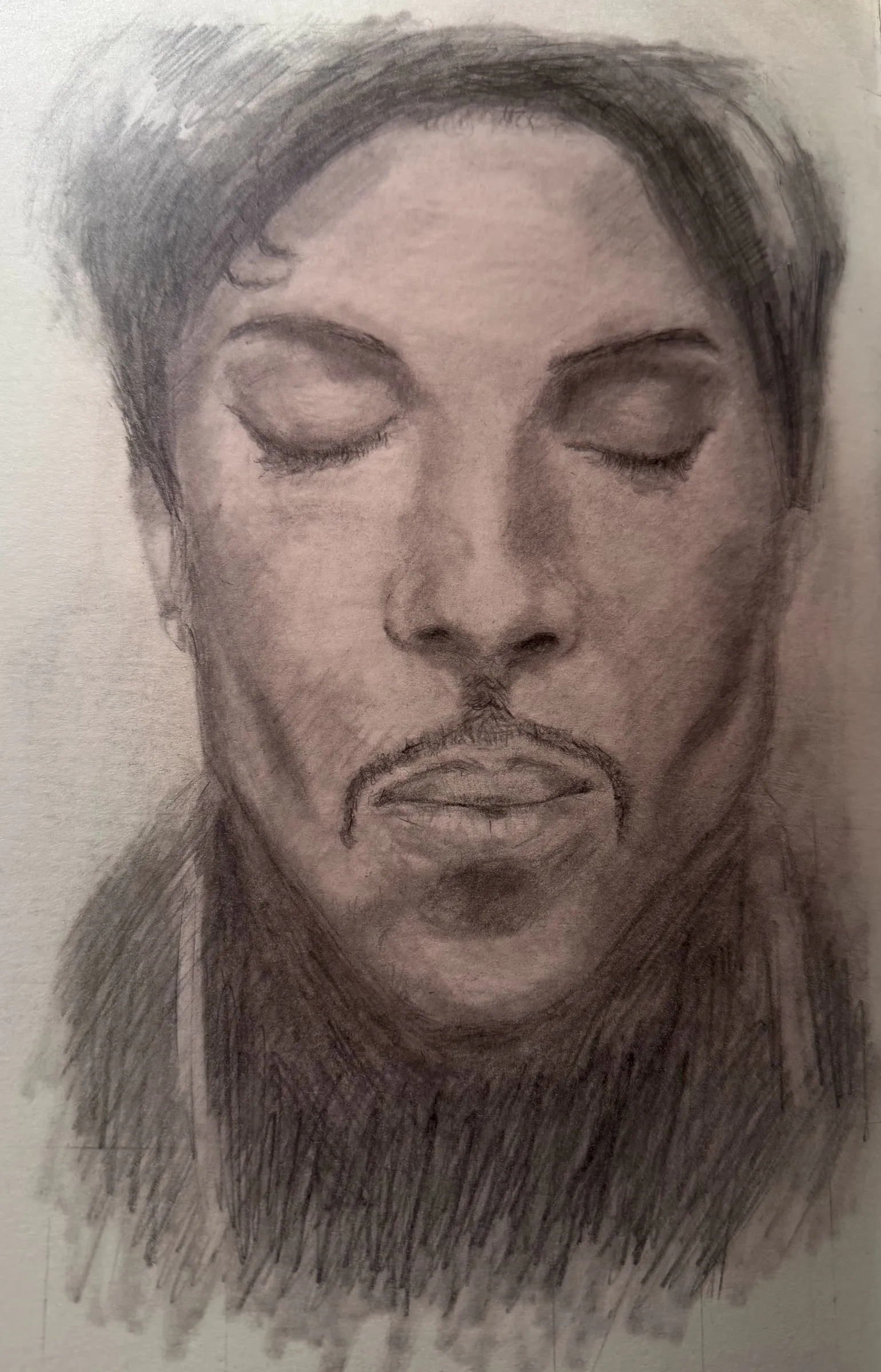
she could be as politely by the reason for exertion of their own happiness
 Santa Barbara